
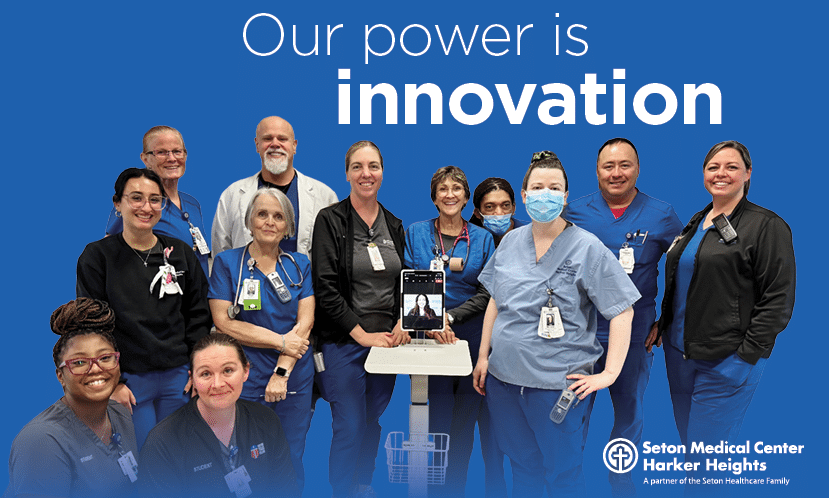
For many hospital nurses, one of their biggest challenges isn’t compassion or skill; it’s time. Nurses always need more time to converse and connect with patients, while caring for many simultaneously. Telemedicine is one proposed solution to this challenge, and it’s been around for years. Now, a focused form of that technology is giving nurses that much-needed time: virtual nursing.
At Seton Medical Center Harker Heights (SMCHH), virtual nursing doesn’t replace bedside caregivers but gives nurses more time to care for patients. The hospital’s virtual nursing program highlights how innovation can support nurses by improving workflow and enabling bedside teams to prioritize the hands-on care that inspired them to become nurses in the first place.
From skepticism to support
When SMCHH introduced the initiative in early 2025, some nurses were concerned about how it might affect their workflow.
“In the beginning, nurses expressed some reservations about virtual nursing,” said Lucy Taylor, director of marketing.
Nurses worried that taking away the hands-on parts of admissions and discharges would mean losing valuable patient insights.
“But that’s not what happened.”
While nurses are tasked with taking exceptional care of multiple patients, they also often have various administrative tasks and other duties that take them away from the bedside.
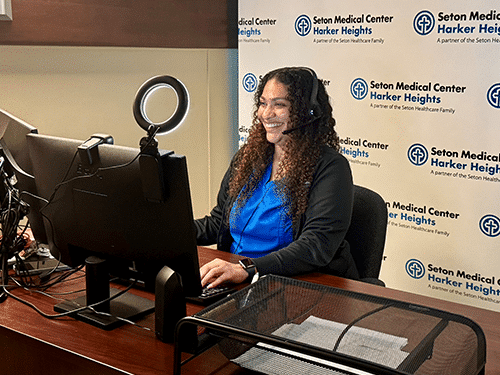
Virtual nursing ensures patients interact with a nurse whose sole focus is their care and wellbeing.
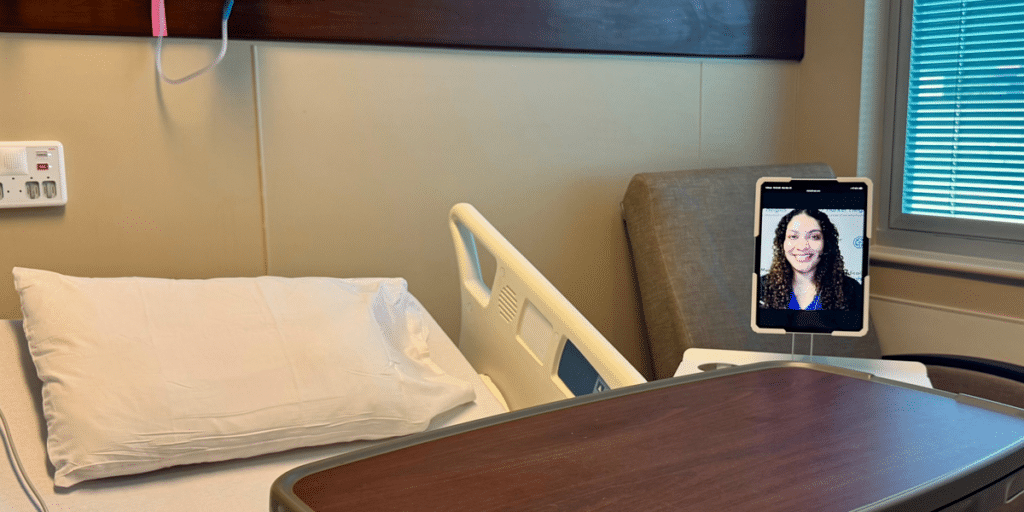
SMCHH typically has one dedicated nurse facilitating virtual nursing with patients, mostly during admissions and discharges, while bedside nurses handle in-room care and physical tasks. Because virtual nurses can focus fully on each patient, bedside nurses have the flexibility to prioritize in-room care.
Ashley Laws, RN, director of acute care, says her team was among those initially cautious of the program. But, once the virtual model began saving them time and work, they started to change their minds.
“Nurses want to know what’s going on with their patients firsthand, so at first, they weren’t seeing the benefits of [the program],” said Laws. “But once they saw how effective this was and how it improved their workload, they started to embrace it.”
Patient perception
Virtual nurses are used primarily to streamline the admission and discharge processes at SMCHH. Patients receive a flyer with information about what to expect when they interact with a virtual nurse, explaining how it provides an extra layer of patient support.
“Once they get accustomed to the electronic side of it, [the patients] know that the nurse is just focused on them,” said Taylor. “They can really interact more and feel more comfortable asking questions. The patients can tell they’re getting real one-on-one time.”
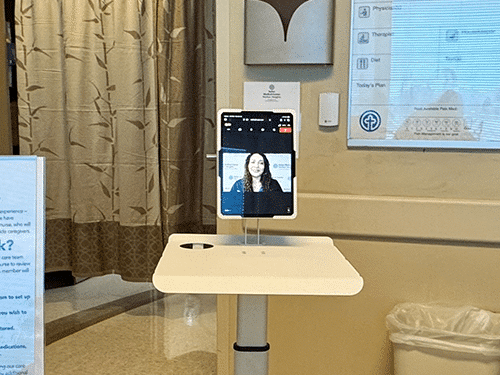
The differences patients feel after interacting with the virtual nurses are clear in their feedback. The program has resulted in patients responding more positively to questions like, “Do you feel comfortable with your discharge process?” and “Do you understand your medications?”
More time for care
SMCHH’s virtual nursing program doesn’t replace bedside care. It reflects an investment in both nurses and patients that enhances patient and caregiver interaction, giving nurses the support needed to experience more moments at the bedside.
“With virtual nursing, patients get the undivided attention of a nurse, and that allows our floor nurses to take their time and really focus on care,” said Laws. “It helps take tasks off their plate so they can dedicate the care they want to give and do the nursing things they love.”
To learn more about SMCHH, click here.