
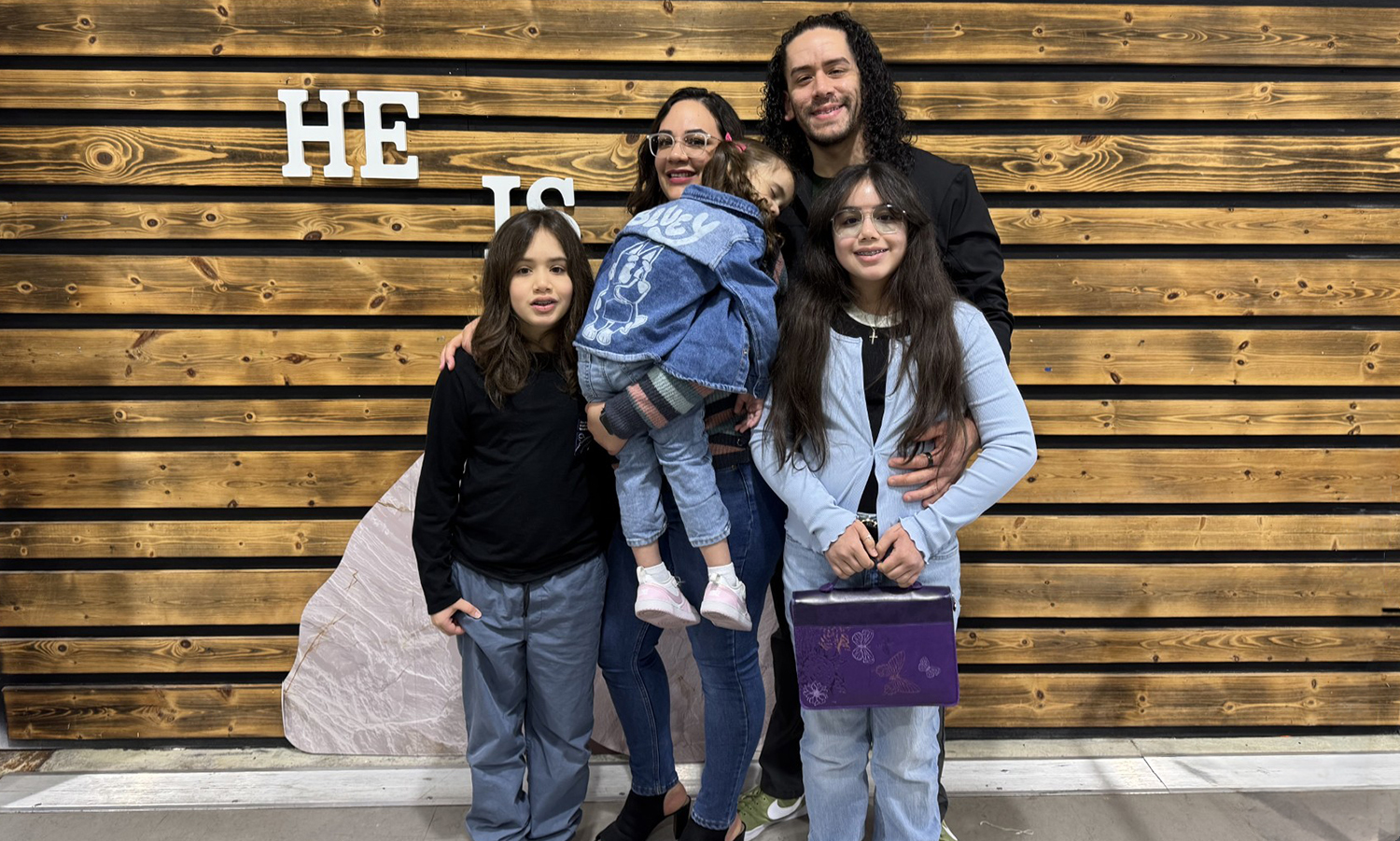
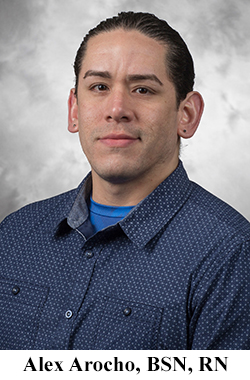
Alex Arocho, MBA, BSN, RN, CPEN, EMT-P, never planned to leave the military. “I wanted to be in the military until the wheels fell off,” he said. Nearly a decade as an Army infantryman, including combat deployments to Iraq during Operation Iraqi Freedom, shaped his sense of duty and leadership.
But those same experiences ultimately redirected his life toward healthcare — a shift born from injury, family, and an enduring desire to serve.
During his first tour in Iraq in 2007, Arocho watched combat medics patch wounds and save lives under pressure. “These guys were my age,” he recalled. “I knew how to shoot guns and get in trouble, and these guys knew how to suture. I asked, ‘Where did y’all learn this? The Army taught us.’”
That discovery stayed with him, even as combat injuries — including a bilateral brain injury and knee trauma from an explosive foreign penetrator — ended his military career earlier than he hoped.
Journey to healthcare
“If I ever had to reshape my future, I thought I’d do something medical,” he said. That promise resurfaced when law enforcement proved physically impossible. A nudge from his wife sealed the decision. “She said, ‘What about that combat medic thing you always talked about?’ And I was like, ‘You know what? I’m going to go for it.’”
Arocho pursued paramedicine at Central Texas College, followed by associate and bachelor’s degrees in nursing and an MBA in health care management from Western Governors University. He now serves as an RN and emergency department manager at Seton Medical Center Harker Heights, carrying both clinical and operational responsibility.
“I went headfirst into medicine,” he said. “It’s not as physical as what I was used to, but it’s a mental challenge.”
His interest in healthcare became deeply personal through his wife, Melissa, who has Type 1 diabetes. “When it’s your spouse, you get really interested in the topic because it’s the person you love most,” he said. That proximity to chronic disease — and a near-fatal insulin error after the birth of their first child — cemented his calling.
“I saw a doctor who really cared,” Arocho said of the Seton physician who took responsibility for the mistake. “Her leadership spoke volumes to me.”
Emergency care via FaceTime
The family’s most defining medical moment came years later, when Arocho’s oldest daughter, Alyssa, helped save her mother during a severe hypoglycemic episode while pregnant with their third child. While on FaceTime from his post as a pediatrics ER charge nurse, Arocho coached his 8-year-old. “I had to count on the best assistant I had at the time,” he said. “My 8-year-old baby.”
Alyssa followed instructions, applying honey to her mother’s cheek until her blood sugar stabilized. “She’s my little endocrinologist,” he said proudly. The nickname stuck — so did her interest in medicine.
Leadership now defines Arocho’s professional identity as much as bedside care. “As a manager, I get to serve the nurses who serve our patients,” he said.
“Leadership is a privilege. It’s an honor that we shouldn’t take lightly.” The transition hasn’t been easy, he says. Balancing staffing, budgets, and patient care poses constant challenges. “You want to do what’s right,” he said, “and you have to learn how to do the best with what you have.”
Family travel
At home, Arocho finds balance through faith, homeschooling and travel. The family explores U.S. landmarks, turning trips into geography lessons, and plans a long-anticipated visit to Puerto Rico, where both of their parents were born. “This year, we’ll be taking all three kids,” he said.
For Arocho, the journey — from infantry to ER leadership, from crisis to calling — remains grounded in gratitude. “Every day is not promised,” he said. “The blessing is being here, able to learn, and able to serve.”
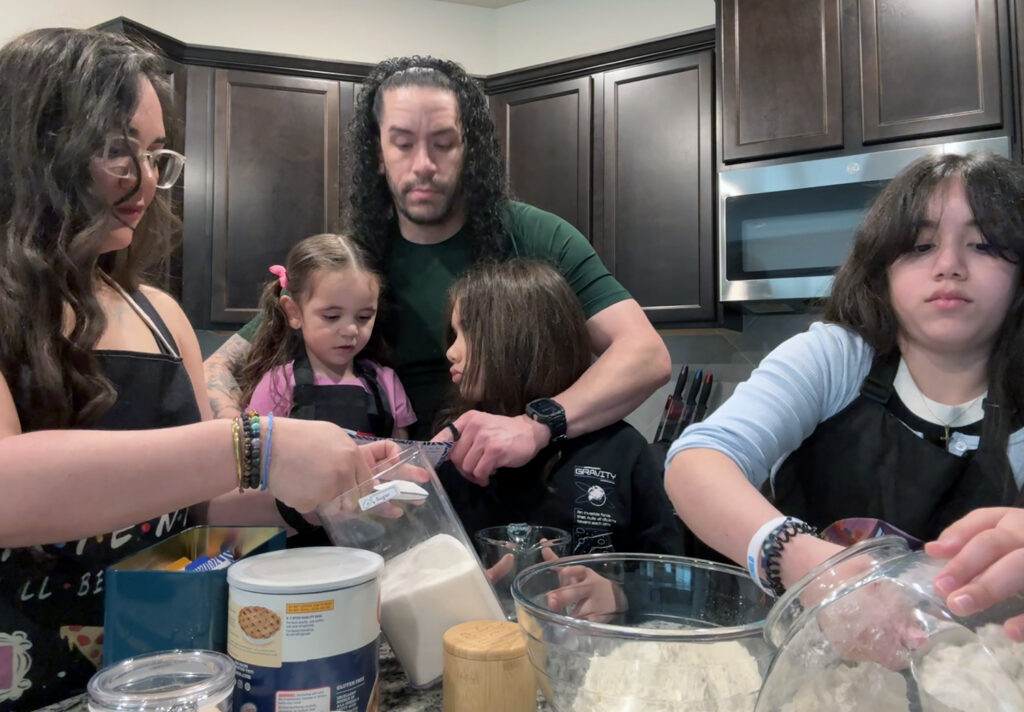
The entire Arocho family helps in the kitchen and has their own cooking channel on TikTok: “tinychefsnarrate.” The videos feature the two oldest children describing each step to cook their favorite Puerto Rican dishes.